Indoor Karting Center vs. Outdoor Kart Park: How Your Insurance Differs
April 30, 2026
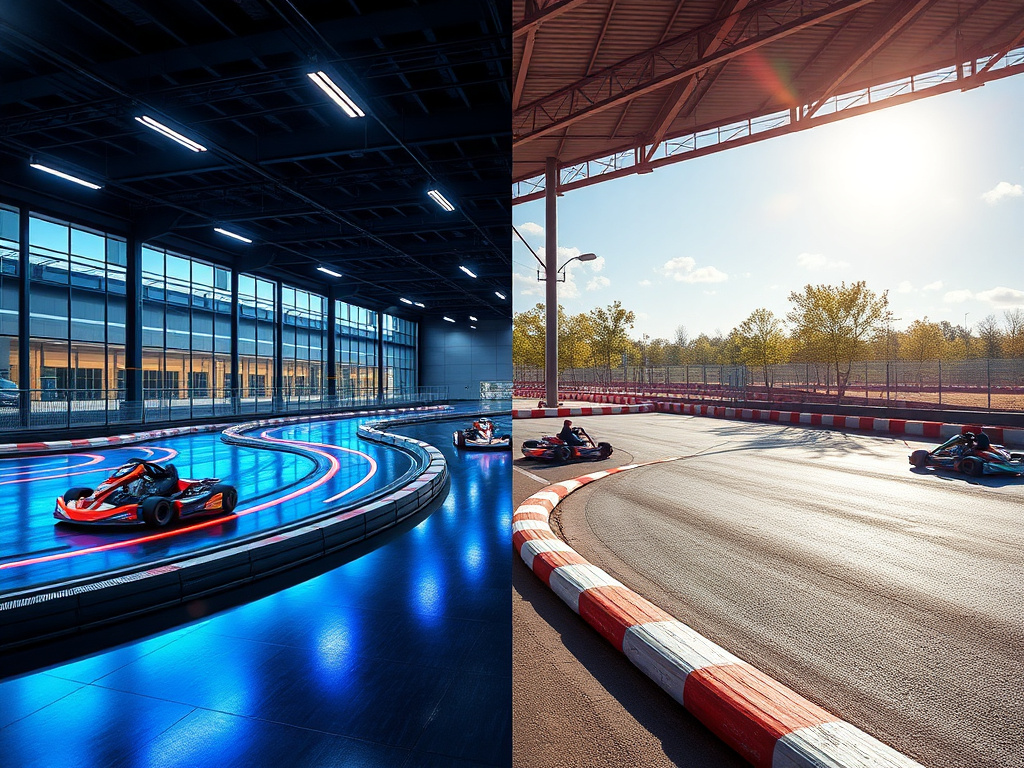
From a driver's seat, indoor and outdoor karting feel like the same sport. From an underwriter's desk, they are meaningfully different risks. If you run one — or are deciding between formats — understanding how the insurance diverges will help you build a program that actually fits your operation.
Property: Building vs. Land and Structures
The biggest difference is where your value sits. An **indoor karting center** is a building-centric risk: the structure, HVAC and ventilation, electrical and charging systems, timing and scoring equipment, and interior improvements all represent concentrated property value under one roof. Your property coverage is a major line, and a single fire or major loss touches a lot of value at once.
An **outdoor kart park** is a land-and-structures risk. Instead of one big building, your exposure spreads across the track surface, barriers, tire walls, fencing, canopies, lighting, and pit or office structures. The property schedule looks different, and the way losses occur — weather, wear, storm damage to open structures — differs too.
Weather and Business Interruption
Weather is where the two formats split hardest. An indoor center is largely weather-independent day to day, but concentrates value such that a fire or storm damaging the building can shut down the entire operation — making business interruption coverage important to bridge a forced closure.
An outdoor park lives with the weather. Rain, wind, and storms can close you for days, and seasonality can shorten your operating calendar significantly. Business interruption for an outdoor park often revolves around weather-driven and seasonal closures, and property coverage has to account for storm and wind exposure to open-air structures. Both formats need business interruption — but for different reasons and against different triggers.
Attendance Patterns
Indoor centers tend to run year-round with steadier, weather-independent attendance, which stabilizes revenue but concentrates exposure into a busy, enclosed environment. Outdoor parks often see peak-season surges and slower or closed off-seasons, with attendance that rises and falls with the weather. These patterns influence how revenue-based rating is applied and how you should think about protecting income against interruption.
FEC Ancillary Risks: Arcade, Food, and Alcohol
Many karting businesses — indoor especially — are really **family entertainment centers (FECs)** with karting as the anchor. Each added attraction is its own exposure. An arcade adds premises and equipment risk; food service adds product liability and kitchen/property exposure; a bar or beer service adds **liquor liability**, which is both a required coverage and a rating factor underwriters watch closely alongside high-speed karts. Trampolines, laser tag, and mini-golf each add more.
The key with any FEC is that every attraction must be accurately described on the policy. An activity left off the schedule can be an activity left uninsured — and the more you stack under one roof, the more your liability limits and program breadth need to grow to match.
Liability Nuances by Format
The formats also generate liability differently. An indoor center concentrates people in an enclosed space, which raises the profile of premises exposures like slips on polished floors, crowding at the barrier line, and spectator injuries in tight viewing areas. An outdoor park spreads people across a larger footprint but adds exposures tied to terrain, run-off areas, parking, and variable lighting conditions at dusk or night. Neither is inherently riskier — they simply present different premises and spectator profiles that a well-built liability program should reflect. In both cases, the participant-liability piece remains the core exposure, because the drivers on the track are the source of a track's most serious claims regardless of format.
How Coverage Needs Differ in Practice
Pulling it together: an indoor center leans on heavy property coverage, charging/electrical fire risk (especially with electric fleets), business interruption against a building loss, and — if it is an FEC — layered liability for arcade, food, and alcohol. An outdoor park leans on structures-and-track property coverage, weather and seasonal business interruption, and storm-resilient limits for open-air assets. Both share the karting core: general liability with **confirmed participant coverage**, kart physical damage, workers' compensation, and umbrella limits sized to karting-scale severity. The point is not that one format is easier to insure than the other — it is that the same set of coverages gets weighted and structured differently depending on where your value and your risk actually sit.
What Stays the Same Regardless of Format
For all the differences, the non-negotiables do not change. Every karting operation — indoor, outdoor, or FEC — needs general liability with participant coverage confirmed rather than assumed, because standard GL so often excludes injuries to the drivers themselves. Every operation needs kart physical damage sized to real replacement cost, workers' compensation on its crew, and umbrella limits scaled to the severity of a class where one serious injury can exceed primary limits. And every operation benefits from the same operational discipline: a current, enforceable waiver, documented maintenance, trained staff, and thorough incident records. Format decides how you weight and structure the program; the karting fundamentals apply no matter where the karts run.
Build the Right Program for Your Format
Whether you run an indoor center, an outdoor park, or a full FEC, your insurance should be built around how and where you actually operate — not a generic template. Getting the property, weather, business-interruption, and ancillary-attraction pieces right is what separates a policy that fits from one that leaves gaps.
Call **844-967-5247** or email **josh@contractorschoiceagency.com** for a free quote, and we will tailor a karting program to your format, your property, and every attraction you run.
Ready to review your coverage?
Get a free quote for an insurance program built around your operation, and everywhere between.